Follow @MoreJoyIsPossible on FACEBOOK ↗ & INSTAGRAM ↗

The artist

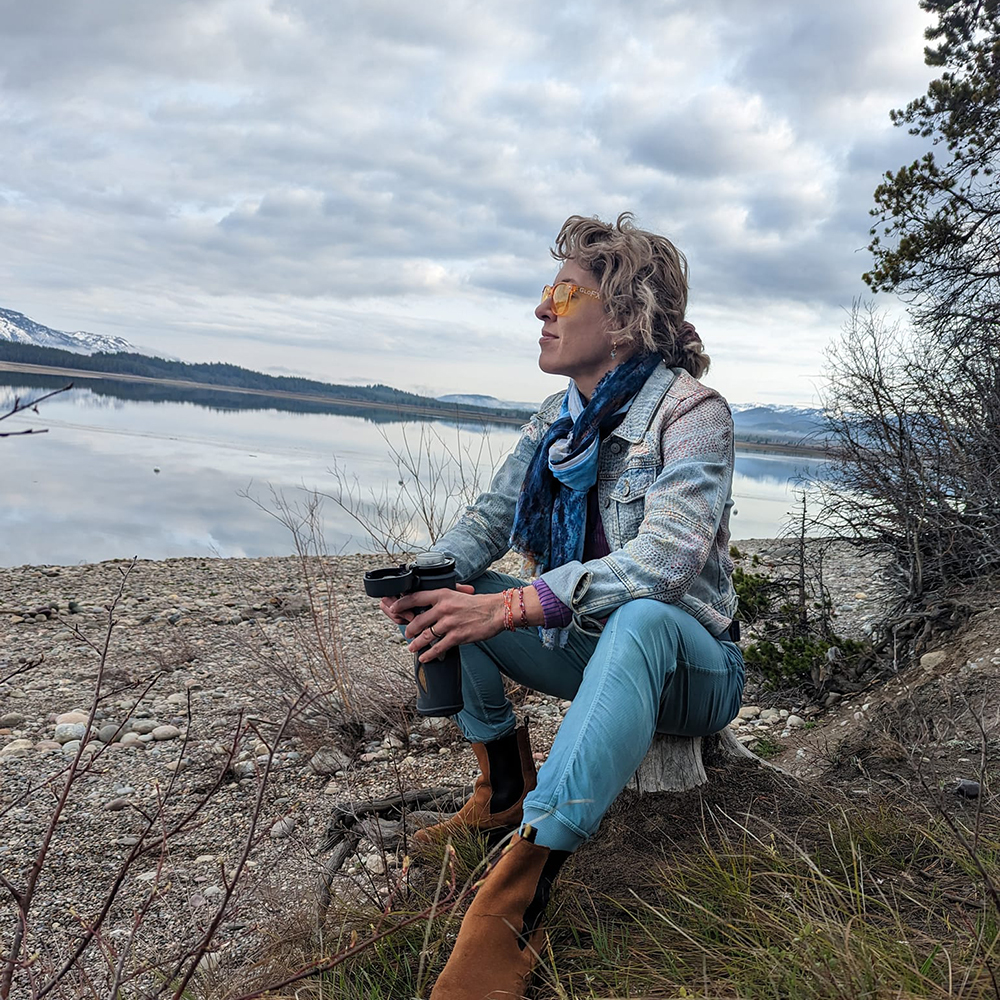
Andrea Napierkowski

I’m a dash-dye artist, color educator and portrait photographer in Grand Rapids. I help people find the colors that make them come alive, then dye and wear them. This is the story of how color became my compass home: from grayscale to spectrum, from containment to full growth, and from performing feelings to finally having them.

Grand Rapids, Michigan

Peggy Memorial, The Artist at More Joy Studio

The Beginning

Born a mirror

About, The Artist at More Joy Studio

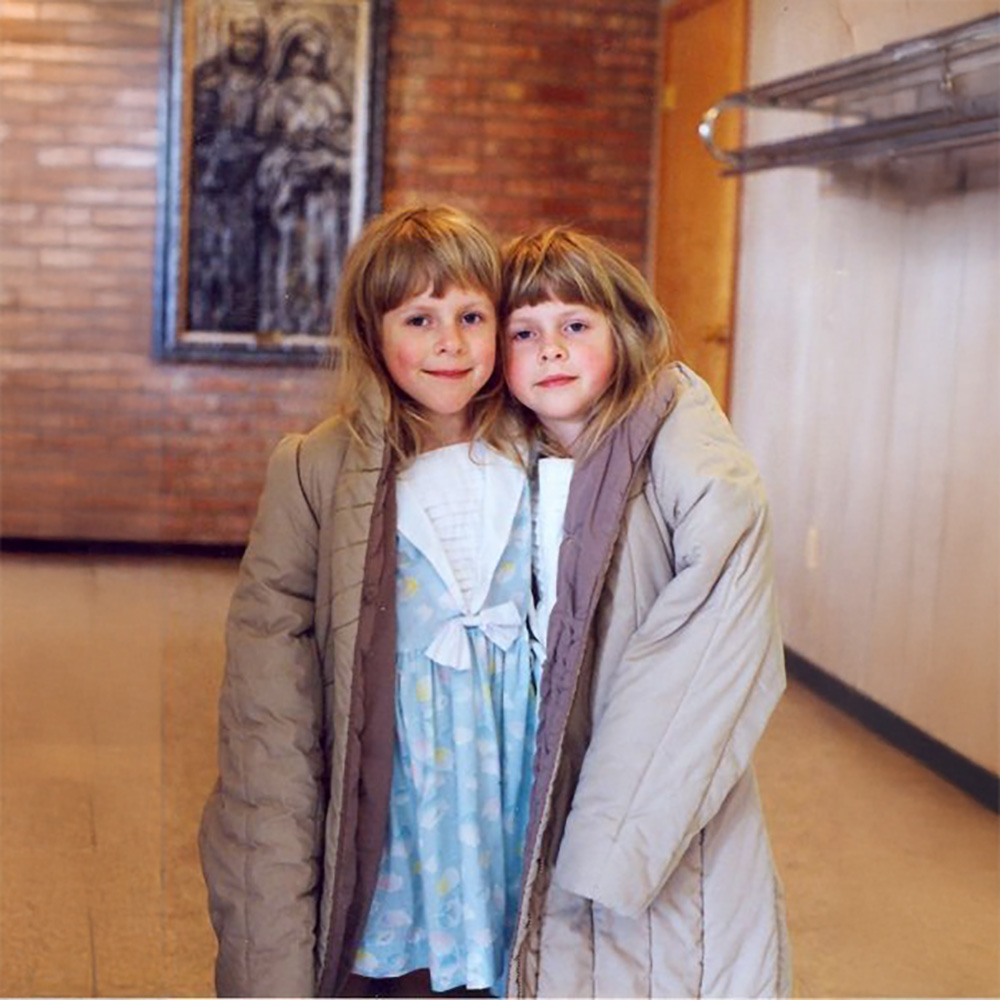
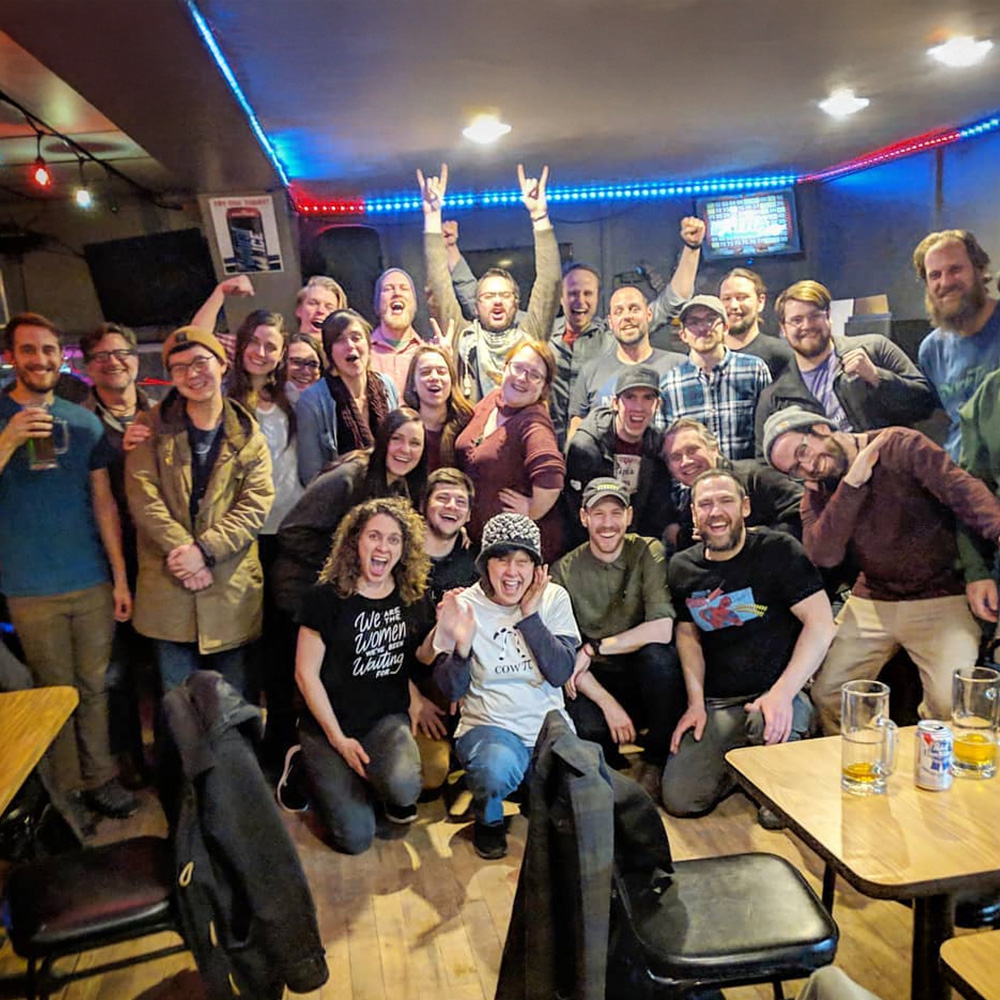
I came into the world as one of two. My twin sister and I were a closed system, reading each other’s faces across a room before either of us had words for it. An arched brow. A softened eye. A suppressed grin. We could run an entire comedy sketch without speaking. I was learning to read bodies and track emotional weather long before I knew it was a skill.

We grew up in a deeply religious household, where there was a language for everything, including who you were and what you were for. I was homeschooled, which taught me to think freely and question systems, and also to perform inside them when I needed to. That language gave me roots. It also taught me to wear costumes that belonged to other people’s stories.

I could feel everyone in the room. I just couldn't feel myself yet.

The Early Start

FOURTEEN AND BUILDING

About, The Artist at More Joy Studio

At fourteen, my twin sister and I started college full time as one of Grand Rapids Community College’s youngest students. I sat in lecture halls full of adults, learning how to keep up and how to look like I belonged. Being the youngest became a habit I carried for years: show up early, learn fast, and become whatever the room needed.

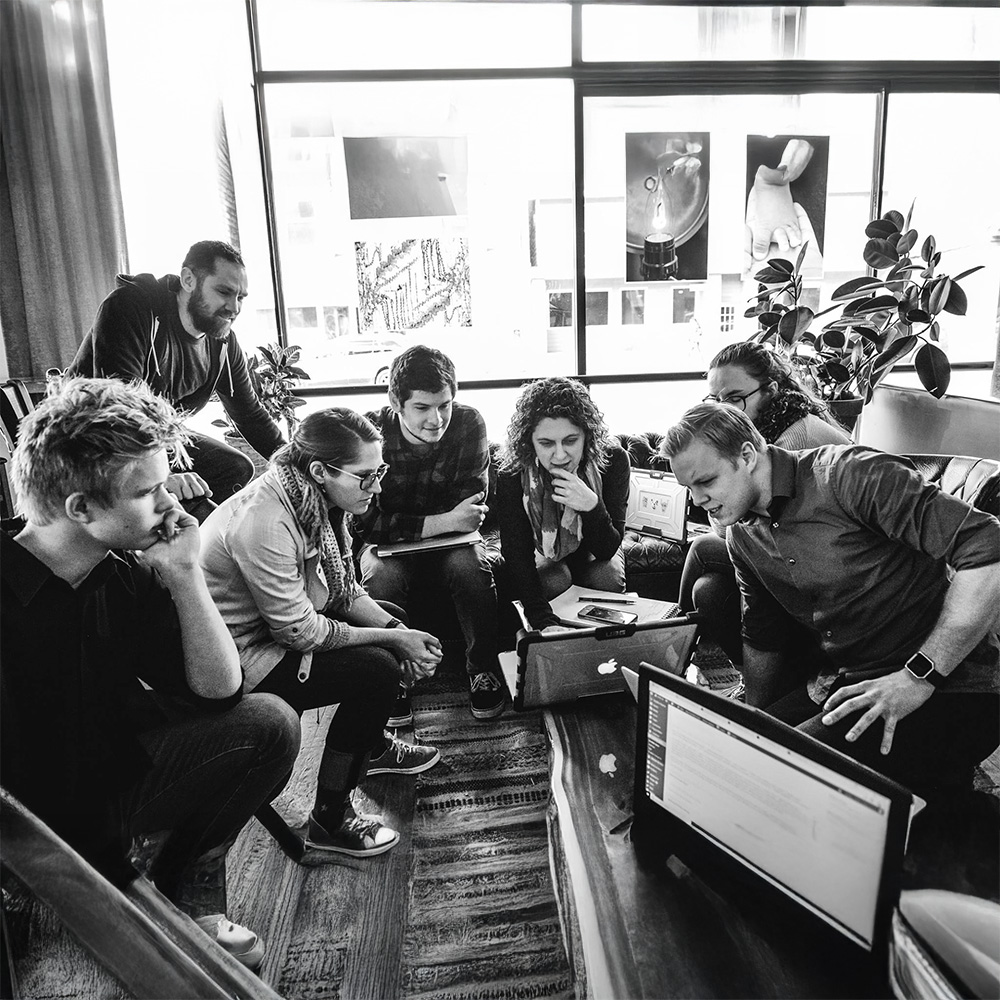
In my twenties, I was part of Jump Shipp, a pilot TV program, and the people behind it helped me start CurlyHost, my web development company. I hired a lot of people. I built websites, brands and online stories for clients, and I was genuinely good at it, because I understood how people wanted to be seen. CurlyHost grew alongside everything else I was building.

I was building everything except a life that felt like mine.

THE BUILDER YEARS

HAPPY ON THE OUTSIDE

About, The Artist at More Joy Studio

From the outside, it looked like I had it figured out. A growing company. A full calendar. Doc Nights, where I gathered people around a documentary and took the conversation deeper. I was surrounded by people constantly, and I wore black almost every day. It was safe, professional and asked nothing of anyone looking at me.

Inside, I felt sad, and I didn’t know why. I didn’t yet know I was autistic. My hypersensitivity to sound, light and people meant my surroundings were always setting me off, and everything started to feel heavy. So I drank, a lot, to mask it. Alcohol seemed like the only thing that turned the volume down. I thought it was bringing me joy.

I had a wardrobe full of black and a life full of other people's colors.

THE TURNING POINT

SOBER AT 33

Jacket, The Artist at More Joy Studio

At 33, I got sober. I want to say that plainly, without drama, because there was very little drama in it. There was no lightning bolt. There was a quiet, scared, curious part of me that had been waiting for permission to exist, and getting sober was the permission slip.

Sobriety took away the thing I’d been using to manage a nervous system that runs at a very specific frequency. Soon after, I was diagnosed with autism. The two arrived together like explanations I’d been waiting my whole life to receive. I wasn’t too much. I wasn’t a problem to be managed. I had spent decades overriding what my body was trying to tell me.

Sobriety didn't fix me. It freed me to find out what I actually was.

The Groundwork

A HOUSE, A GARDEN, A PRACTICE

Red, The Artist at More Joy Studio

The year I got sober, I bought a house and started a creative practice for a simple reason: my hands needed something to do. I built an art room just to be near the materials. Fabric. Beads. Thread. Color. I planted a garden. I learned I needed soil, sun, peace and quiet to drop out of survival mode and into play.

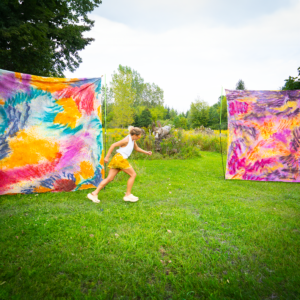
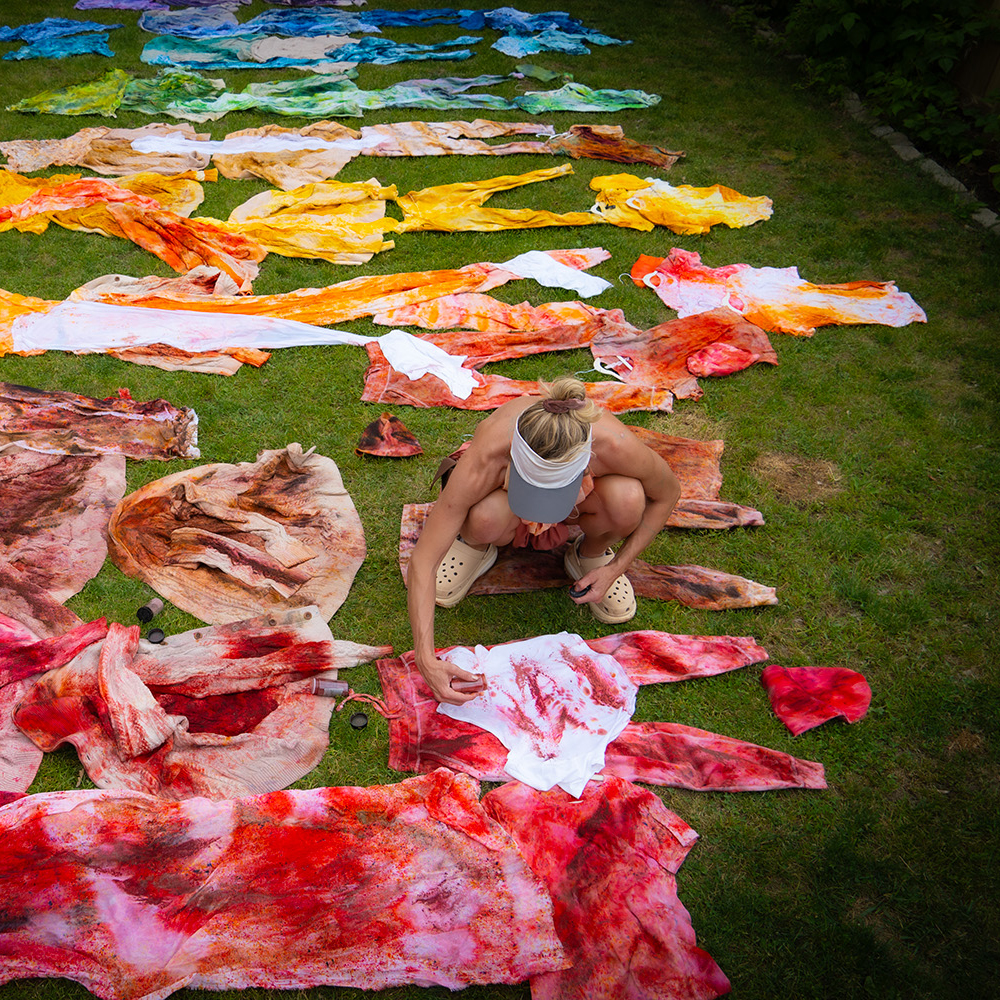
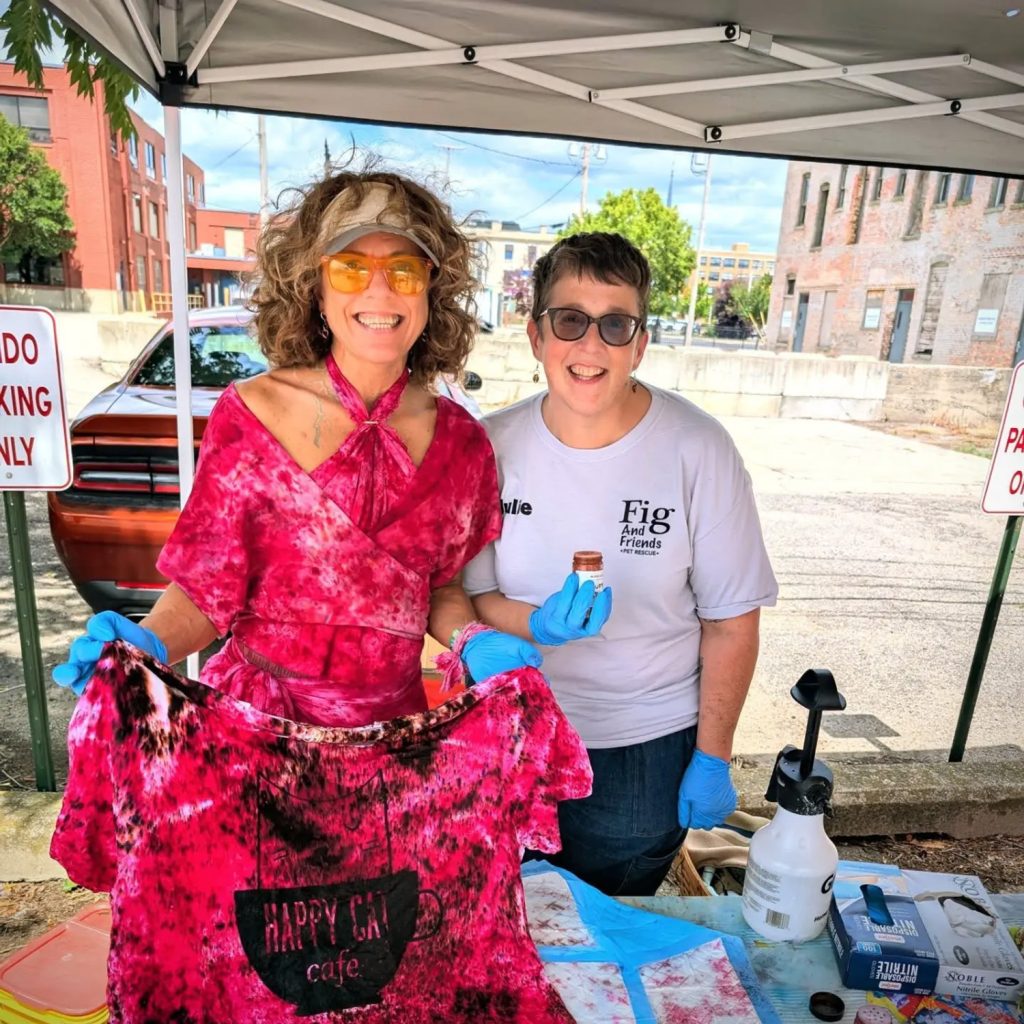
Then something surprising happened: I wanted to play after work. The first time I sprinkled Procion MX dye powder onto wet fabric, it traveled where I hadn’t told it to go and landed in patterns I hadn’t planned. Something in my nervous system recognized it. Here was a conversation with something unpredictable that I could also trust.

When I stopped living in fight or flight, I found more joy than I ever had drinking.

THE DISCOVERY

MORE JOY IS POSSIBLE

Wild Zen

“More joy is possible” started as something I told myself in those early years. I had believed alcohol was where my joy came from. Now I was learning that art, music and dance could do the trick, and they didn’t take anything from me the next morning. Every time I made something, danced or played, the motto proved itself again.

That’s what the infinity sign in my logo means. It stands for a sustainable kind of joy, the kind you can only reach when you radically accept your reality and then creatively try to make it better. Creative practice, and sharing it with other people, is what has carried my long-term sobriety: joy I can return to again and again.

Joy that lasts isn't found. It's practiced.

THE PRACTICE

Dash-Dyeing Taught Me to Feel

Popups, Pop-Up Recaps

I didn’t set out to build a healing practice. I set out to make something with my hands. But every time I held a handful of colors, my body answered before my mind did. Some days I reached for fire. Some days for water. Some days for the deep browns of the ground. My closet became a mood ring.

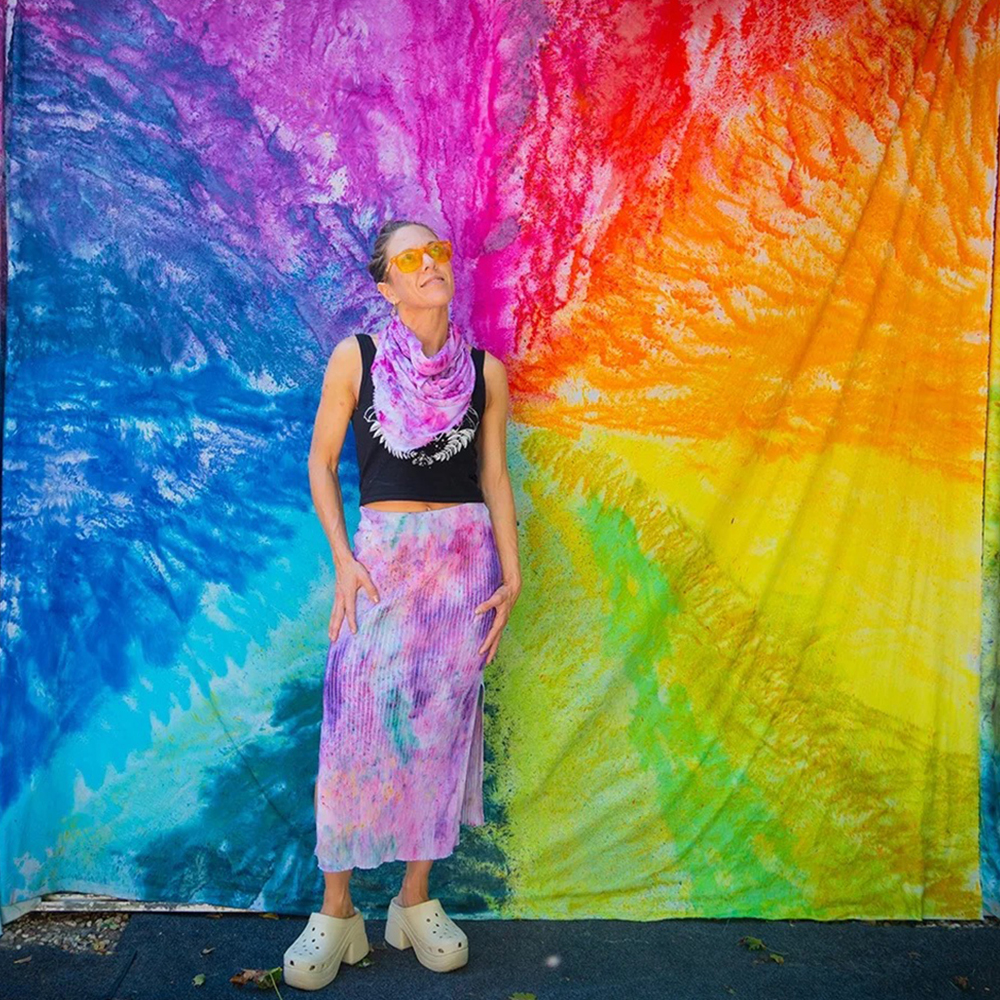
Dash-dyeing taught me to understand my emotions. It taught me that I could sprinkle onto my body what my brain wanted to see more of in the world, and that the colors I wear tell the truth about how I feel. Not everyone needs the same hue, just like not everyone needs the same amount of salt. But everyone has one.

I was always good at becoming what the room needed. Color taught me to become what I needed.

THE DESIGNER

MADE BY SOMEONE WHO GETS ITCHY

When I started sewing, I made the clothes I couldn’t find. I’m the person who cuts out every tag, notices every seam and gives up on a beautiful shirt by lunch because it scratches.

So my pieces have no sewn-in tags. They have as few seams as I can manage. They’re cut from soft, flowing rayon that moves when I move. A Festival Scarf is one generous piece of fabric you can wrap, drape and tie, so you decide how closely it touches you. None of that is an accident or a shortcut. It’s what my body taught me.

I can’t promise my clothes will feel the same to you. Every body is different, and only you know what you need more of. But I can promise every choice was made on purpose. See the details.

The way something feels can matter as much as the way it looks.

THE WORK

Color in Public

Art Prize, The Artist at More Joy Studio

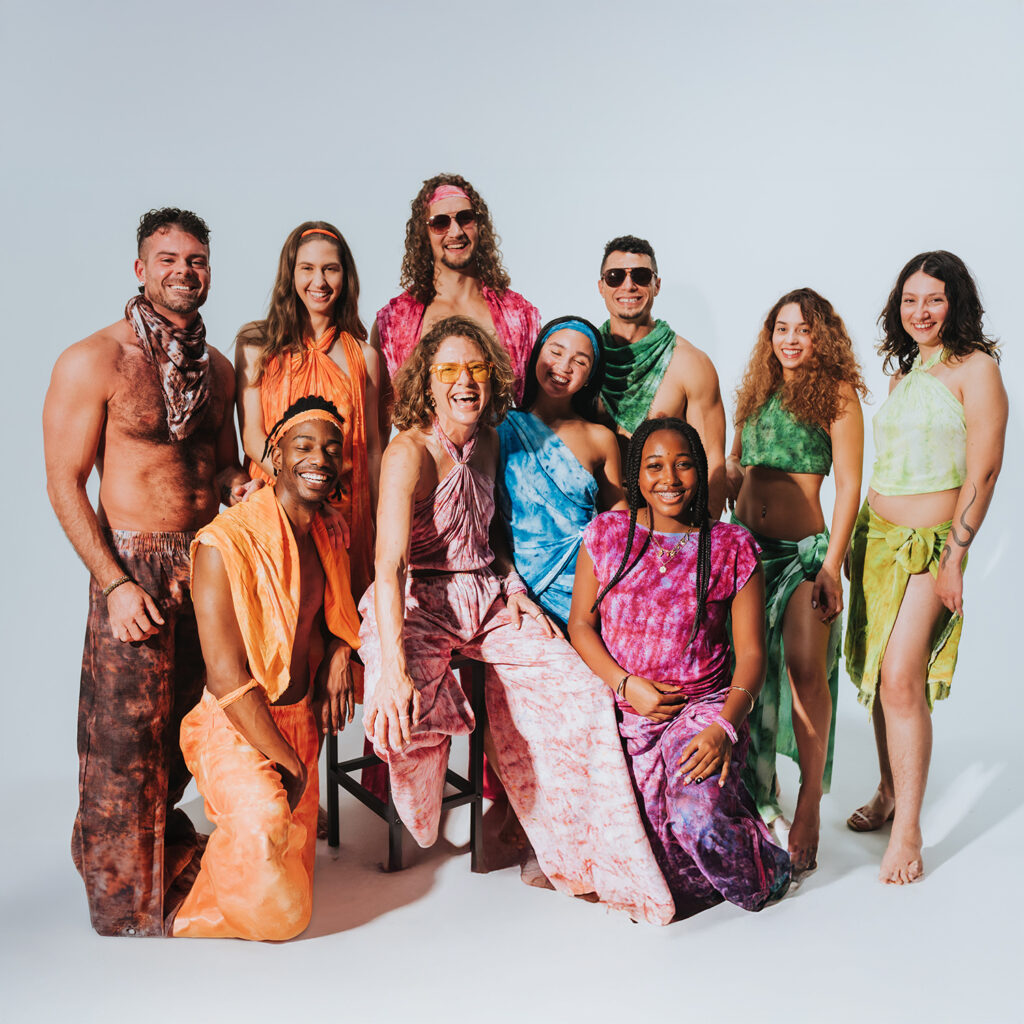
What began in my garden went public slowly: a dye session here, a pop-up there, a scarf draped over someone’s shoulders and the look on their face when the color landed right. Then it walked a runway. I’ve created three fashion collections: the Vibrant Rainbow at Michigan Fashion Week, the Autumn Rainbow at the 494 Art of Now Gallery Fashion Show, and Cosmic Bodies at Michigan Fashion Fest’s NYFW showcase.

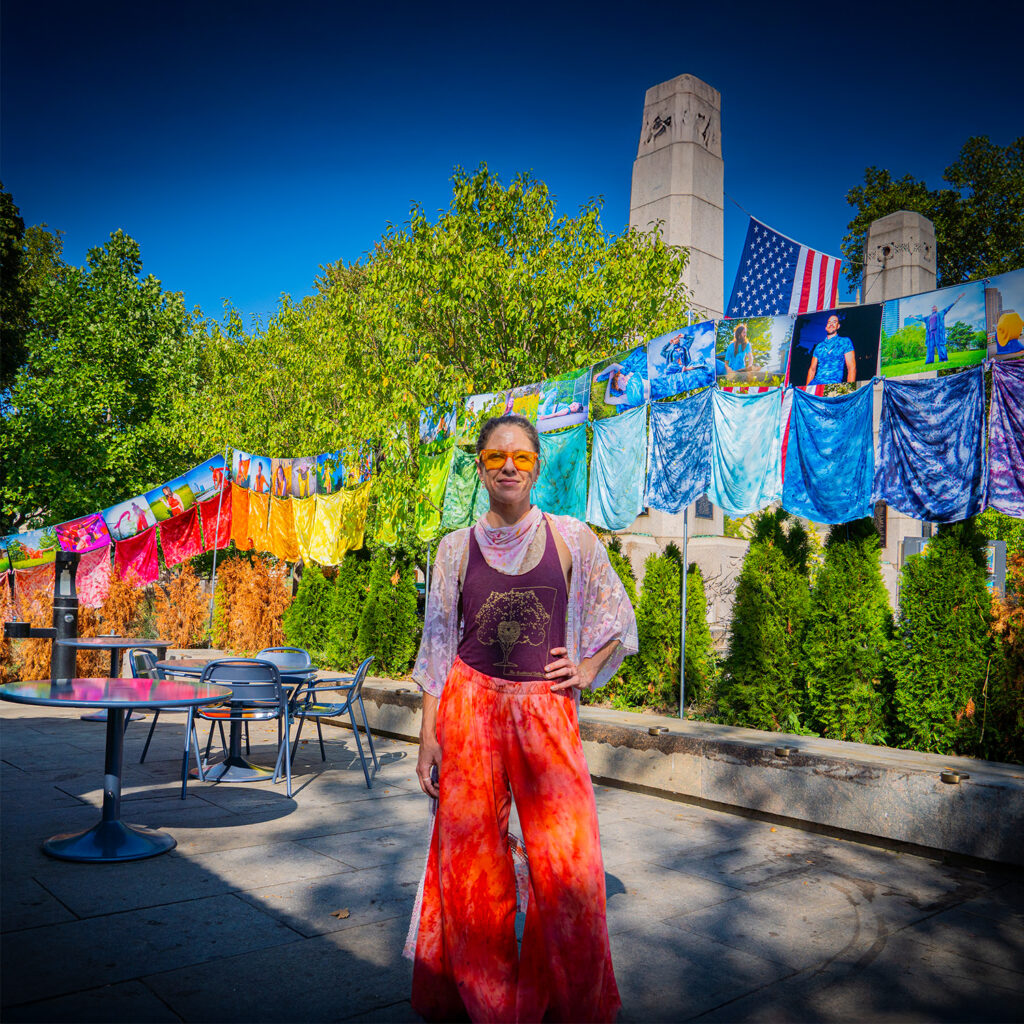
My Power Portraits have filled two ArtPrize installations. The Spectrum Between Us paired each person with the one color that unlocked them. Michigan Birds dressed thirty people as the Michigan birds that live inside them, and ended with a flock dancing at Rosa Parks Circle. Every time, I watched the same thing happen: people recognizing something they already were.

The clothes don't create the feeling. They make the person inside them more visible.

Our Future

WEIRDING PEOPLE IN

Light Night New York Fashion

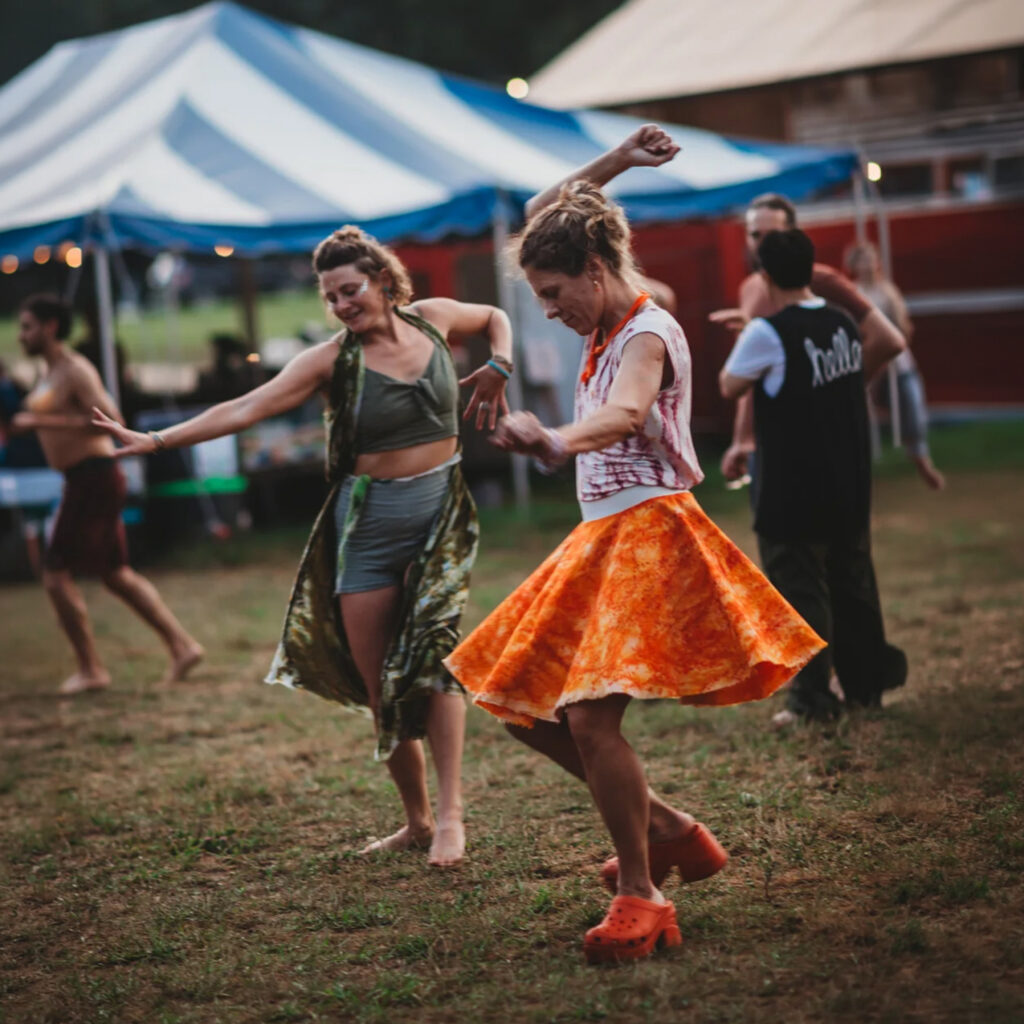
People worry that their colors will weird someone out. I’ve learned the opposite is true. When you’re a big version of you, you’re not weirding people out. You’re weirding them in. You give off the right light, and the right people gravitate toward it. Dancing with friends in pieces I’ve made is still the best proof I know.

I believe each of us is born with gifts that need to be cultivated. Dash-dyeing is how I tend mine. It’s what I want for everyone who steps into my studio: a chance to hold the colors, notice what your body reaches for, and wear what you feel. Recovery taught me that joy can be built. Color is how I build it.

More joy is possible. Come find yours.

Keep Reading

Learn About

The Company

More Joy Studio is a dash-dye and design house where people learn to wear what they feel.

Understand

The Practice

Dash-dyeing is a somatic creative practice that teaches people how to feel, and lets them wear it.