Discover
How to dash dye
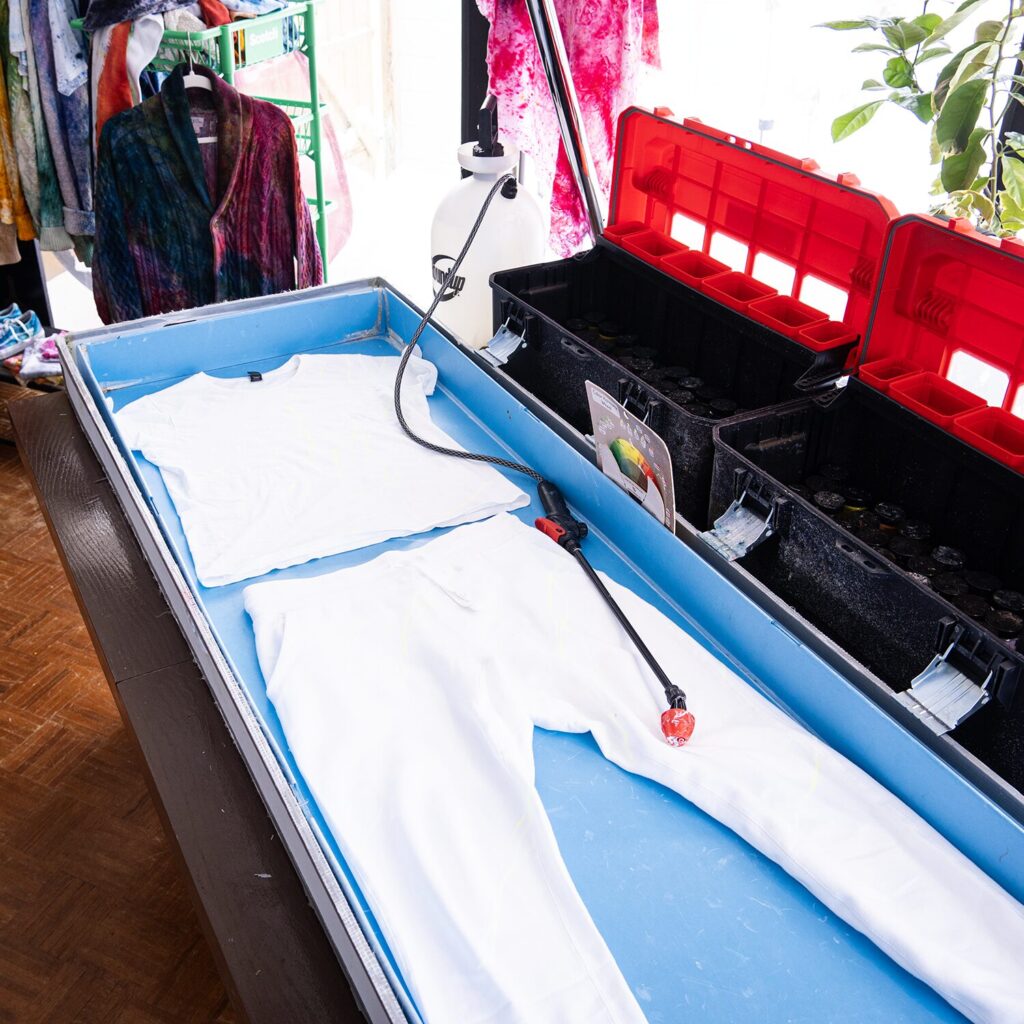
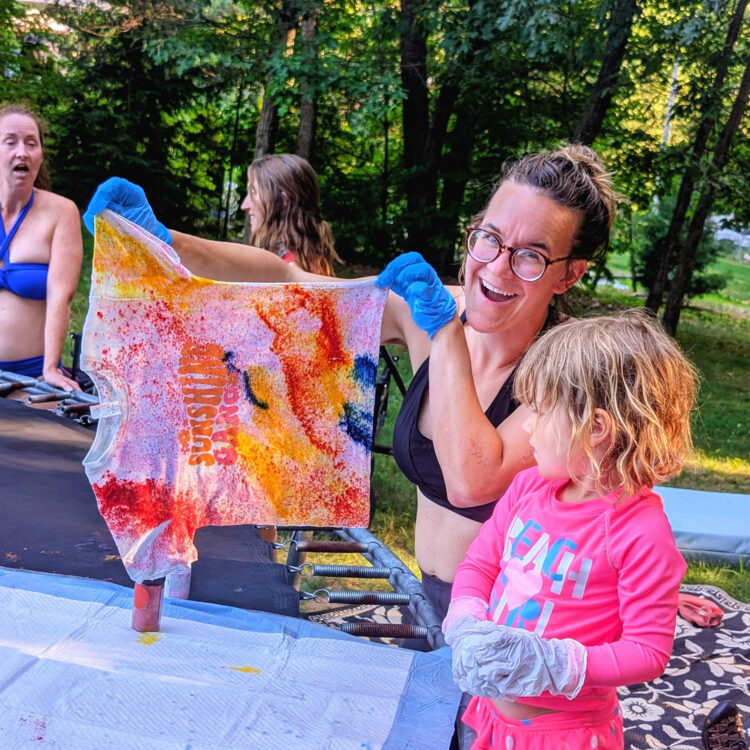
Powdered pigment, wet fabric, a little mist. Dash-dyeing is the most playful way to bring color into your clothes. You don’t need tying, buckets or a dye bath, and you see your pattern as you make it.
Grand Rapids, Michigan
Our Method
Not your usual tie-dye
Bottle dye
Dye mixed in water and squeezed on. The color stays true to one solid shade, the hex code you see here.

Ice dye
Powder melts slowly under ice and pools into soft, watercolor-like ranges of the shade. Swatch: Dharma Trading Co.
Dash dye
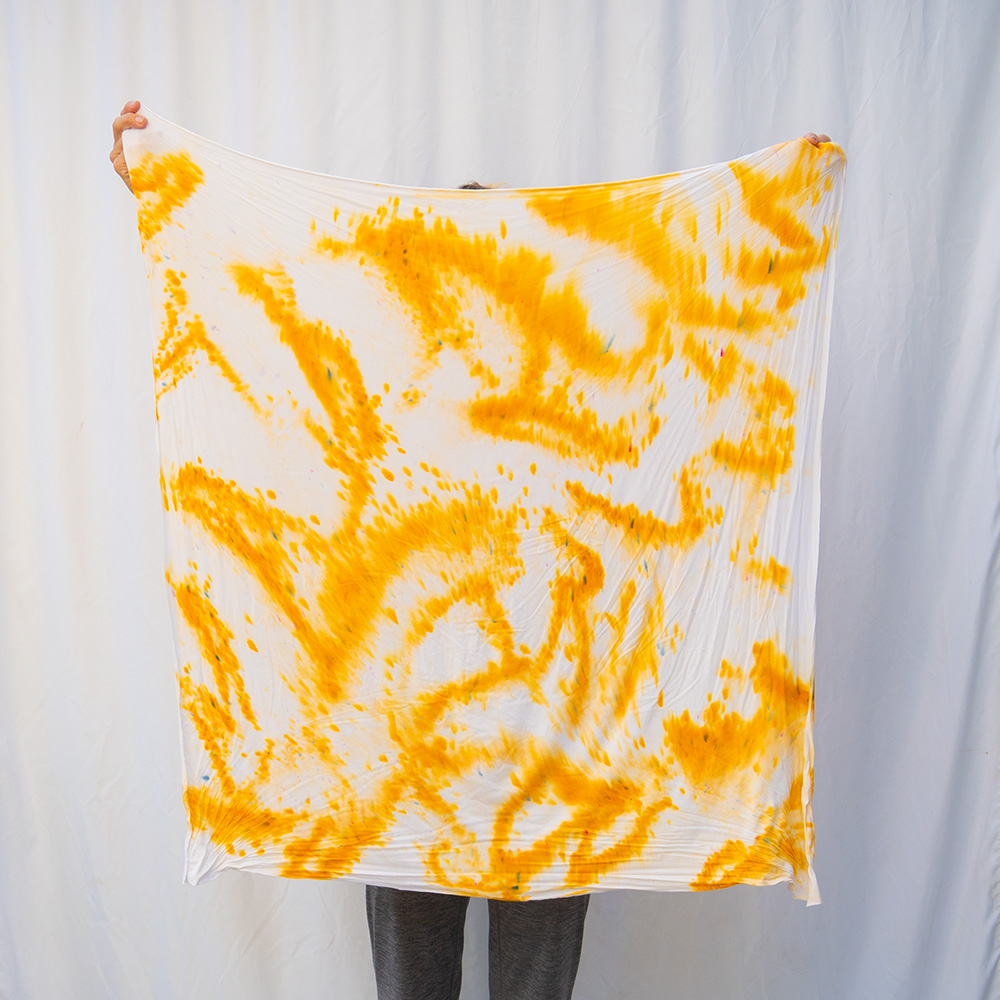
Activated powder sprinkled on wet fabric, then misted. It blooms and splits as it travels, so hidden colors burst out.
Step by Step
Five steps to your first piece
Step One
Prepare Your Dye
Use my activated dyes as-is, or make your own by mixing Procion MX powder and soda ash 50/50.
Step Two
Prepare Your Fabric
Dampen your piece with plain water, then wring it out until it’s damp but not dripping. Scrunch it, fold it, or lay it flat. Each way gives a different pattern.
Step Three
Dash Your Colors
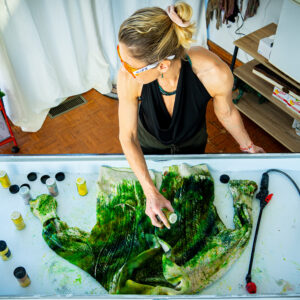
Sprinkle, flick or tap the powder onto the damp fabric. Stack it for deep color, blow it for a spray or scatter it in a burst. Start light, because you can always add more. Then mist with soda ash and water so the pigment travels and each particle does its thing. Blended colors split as they move. Watch and decide: more red here, a little purple there, or stop.
Step Four
Let it set
Bag or wrap your piece and leave it somewhere warm (at least 70°F/21 °C) for 4 hours or more. Overnight gives richer color. Short on time? Steam it in a pressure cooker at 5 PSI for 1 minute. Use a cooker you’ll keep only for dyeing.
Step Five
Rinse & Wash
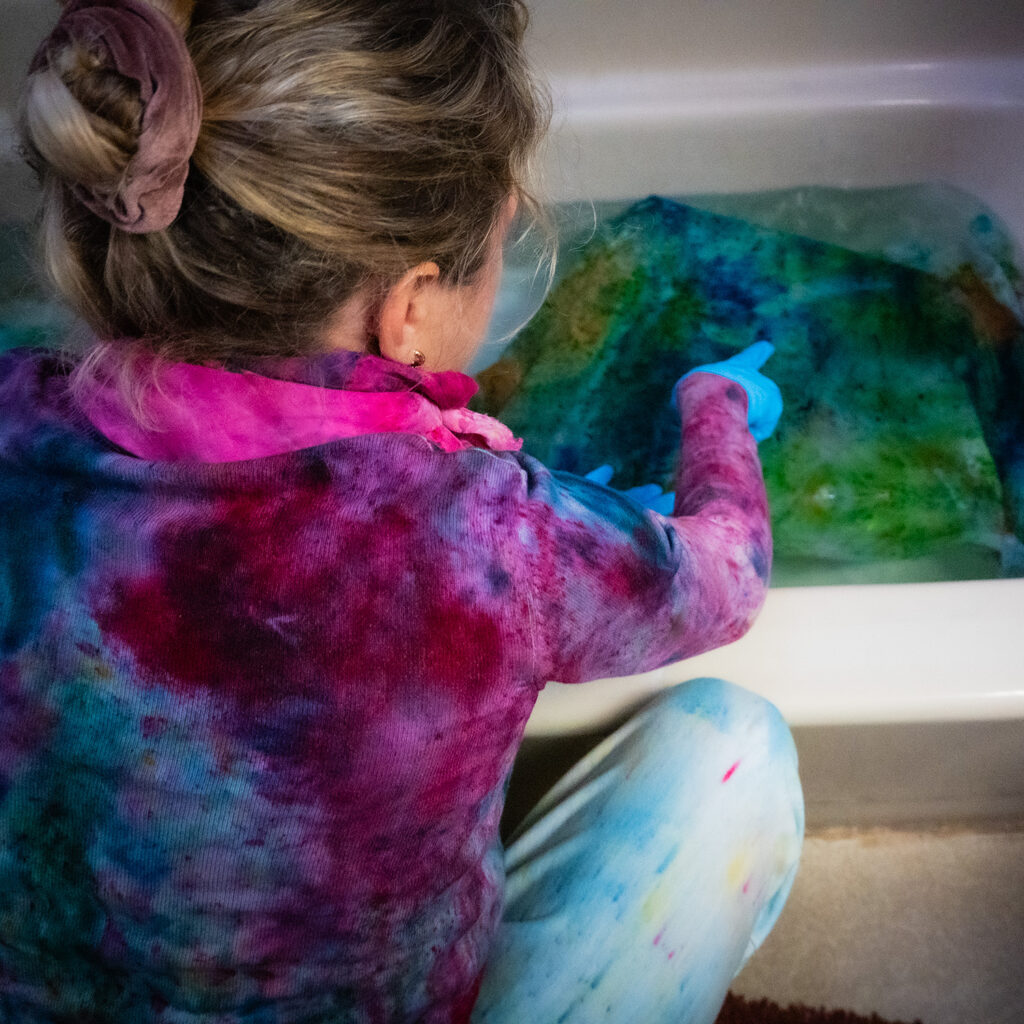
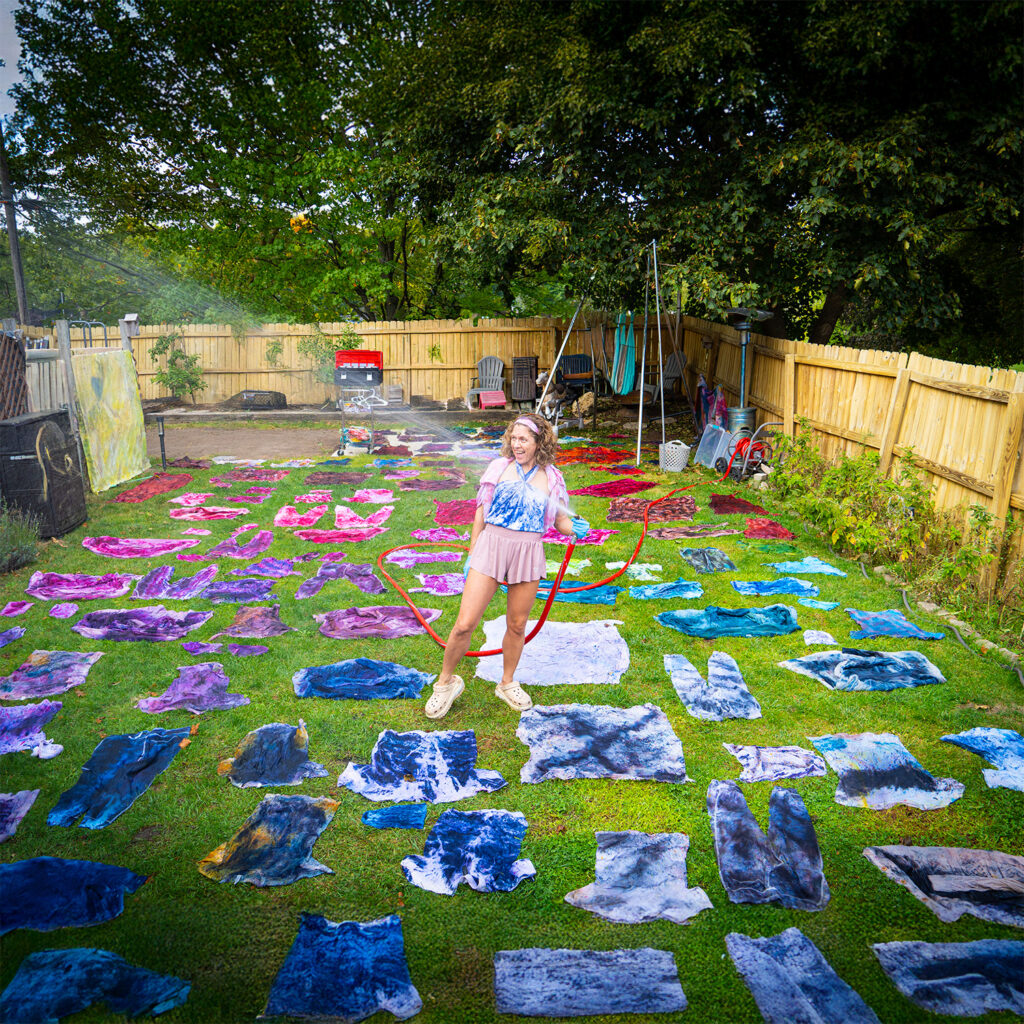
Rinse in cold water until it runs mostly clear, then wash warm with mild detergent. Wash it alone or with similar colors the first few times.
Safety Tips
How to dye safely
- Wear a dust mask whenever you handle dry powder. If you dye often or you’re pregnant, upgrade to a proper respirator with the right filters.
- Wear gloves. Dye stains skin, and soda ash can irritate it.
- Protect your eyes. If dye gets in them, flush with water right away, and seek medical care if irritation continues.
- Work somewhere well ventilated and easy to wipe down.
- Clean as you go. Wipe up spilled powder with a damp cloth so it doesn’t become airborne.
The Science
Why it works
Dash-dyeing uses fiber-reactive dye, which forms a permanent chemical bond with plant fibers. Soda ash raises the pH, and that’s what triggers the bond. A little water is all it takes to start the reaction, so you don’t need to pre-soak. Polyester and other synthetics have nothing for the dye to bond to, so they stay their original color.
Making your own soda ash: bake baking soda on a sheet pan for an hour at 400°F to turn it into sodium carbonate.
Make Something at Home

Choosing Fabrics To Dash Dye
The best fabrics for dash-dyeing and tie-dye with fiber-reactive dyes: why rayon glows brighter than cotton, which blends work, what
What Can You Dash Dye?
Activated dye bonds with anything made from plants. What you can dash-dye, from vintage clothing, denim and scarves to canvas
Upcycling Something From Your Closet
How to upcycle clothes with dye: the long history of people mending, patching and re-dyeing what they own, from Japanese