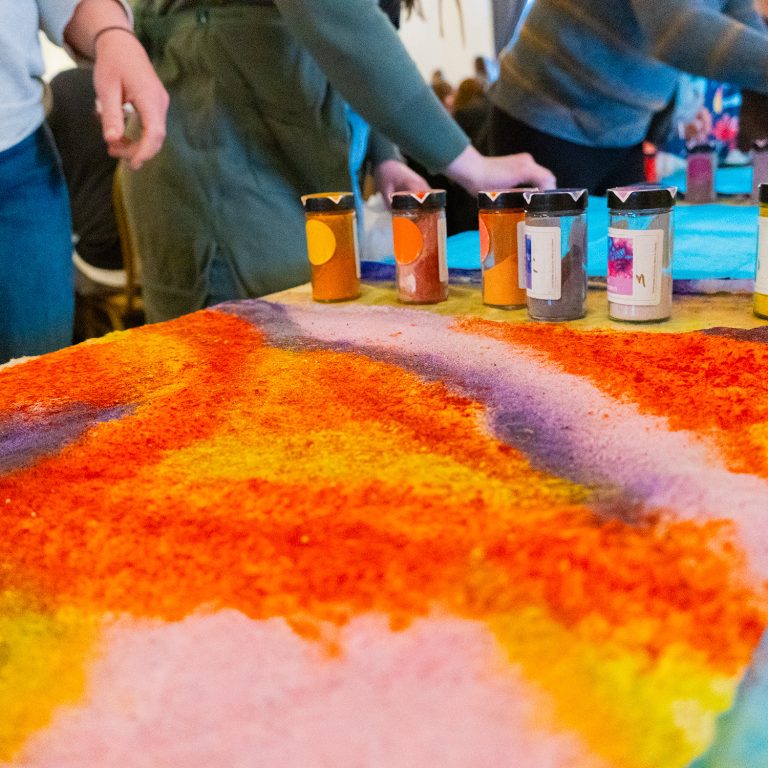
One of my favorite moments during a More ∞ Joy color session happens when someone unfolds their piece for the first time.
The room fills with gasps.
Sometimes it’s the color combination that surprises them. Sometimes it’s the pattern they created without realizing it.
And sometimes the biggest surprise is the fabric itself.
Many people arrive assuming that cotton will produce the brightest results. After all, cotton is natural, breathable, and found in nearly every closet.
But over years of dyeing hundreds of garments, I’ve discovered something unexpected:
The fabrics that often celebrate color most beautifully aren’t cotton at all.
They’re rayon.
Color Starts With the Fiber
When people choose clothing for a dye session, they often focus on style, fit, or color.
What many don’t realize is that the fabric itself becomes a collaborator in the creative process.
Different fibers receive color differently.
Some fibers soften color.
Some create earthy, muted effects.
Others allow color to become rich, luminous, and intensely saturated.
The same dye applied to two different garments can produce dramatically different results.
That’s not because anything went wrong.
It’s because every fabric tells the story of color in its own language.
Understanding Natural Fibers
For our dye sessions, natural fibers are generally the best choice because they readily bond with fiber-reactive dyes.
Some common natural fibers include:
- Cotton
- Linen
- Hemp
- Rayon
- Modal
- Lyocell (TENCEL™)
- Bamboo rayon
These fibers all contain cellulose, making them receptive to color.
But they don’t all perform the same way.
Cotton: The Familiar Favorite
Cotton is one of the most beloved fibers in the world.
It’s durable, breathable, comfortable, and easy to find.
Cotton creates beautiful results in dye sessions, particularly when you’re seeking:
- Earthy palettes
- Soft color transitions
- Vintage-inspired looks
- Everyday wearability
Cotton often absorbs color in a way that feels grounded and natural.
Sometimes participants expect electric jewel tones and instead receive something softer and more muted.
The colors aren’t weaker.
They’re simply being expressed differently.
Rayon: The Surprise Winner
If there is a secret star of the dye studio, it’s rayon.
Rayon begins as wood pulp from trees. Through a manufacturing process, the plant cellulose is transformed into a silky, flowing fiber that remains highly receptive to dye.
The result is often stunning.
Rayon tends to produce:
- Brighter color
- Greater saturation
- Rich jewel tones
- Dramatic contrast
- Luminous gradients
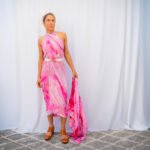
When a cotton garment and a rayon garment are dyed side-by-side using the same colors, the rayon frequently appears more vibrant and alive.
It’s one of the reasons so many of my favorite dye pieces have been rayon-based garments.
The Family of Wood-Based Fabrics
Many people don’t realize that rayon has several cousins.
You may find these names on clothing tags:
Rayon (Viscose)
Soft, flowing, vibrant, and highly receptive to dye.
Modal
Made from beech trees and known for its silky softness and durability.
Lyocell (TENCEL™)
A newer generation wood-based fiber with excellent drape and beautiful color absorption.
Bamboo Rayon
Rayon produced from bamboo pulp, offering softness and excellent dye performance.
All of these fabrics tend to celebrate color exceptionally well.
My Favorite Fabric Blends
Through years of experimenting, I’ve developed a special appreciation for rayon blends.
Particularly:
- 95% rayon / 5% spandex
- 92% rayon / 8% spandex
- Rayon / nylon blends
These fabrics combine the vibrant color response of rayon with added stretch, comfort, and durability.
They move beautifully on the body and often produce some of the richest dye results in the studio.
Many of the garments people receive the most compliments on are made from these blends.
What to Bring to a Dye Session
If your goal is maximum color vibrancy, look for:
✓ Rayon
✓ Modal
✓ Lyocell (TENCEL™)
✓ Bamboo rayon
✓ Rayon-spandex blends
✓ Rayon challis
✓ Rayon jersey
If your goal is a softer, more grounded palette, cotton remains a wonderful choice.
Neither is better.
They simply create different experiences of color.
Let the Fabric Participate
One of the things I love most about this work is that color is never fully controlled.
The garment participates.
The fiber participates.
The folds participate.
The person participates.
Every piece becomes a collaboration between color, cloth, and creativity.
The next time you look at a clothing tag, don’t just ask what color it is.
Ask what kind of story the fabric wants to tell.
You might discover, as many of us have, that a humble wood-based fabric holds some of the brightest color magic of all.