You’ve found your colors. Now let’s look at what you already own. This is the closet edit I do with every Color Revival, written so you can do it on your own. All you need to start is the foundation shade you already wear.
- Step 1: know your colors. Your foundation points you to your skin tone in Find Your Colors.
- Step 2: pull everything out and sort it into piles.
- Step 3: learn your shape, your frame and your lines.
- Step 4: dye the pieces worth keeping into your shade, starting with denim and t-shirts.
Pull everything out
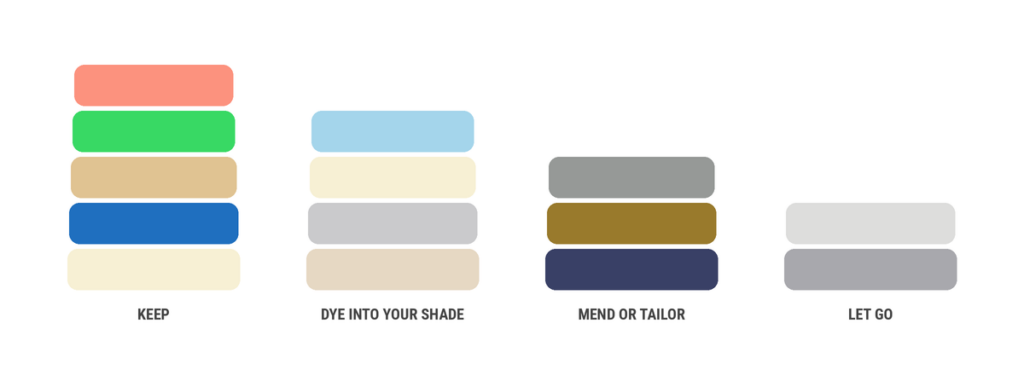
Take every piece out and give each one a pile. Four piles, left to right: keep, dye into your shade, mend or tailor, let go.
A few things to watch for as you sort:
- Not worn in six months? That’s the first question, not the final answer.
- Loved, but shabby? If it still fits and you used to wear it constantly, it may only need mending or a fresh color.
- From another life? Some pieces fit a lifestyle you don’t live anymore. Sort the rest into workwear, off-duty and special occasion, and see where the gaps are.
Six questions for every piece
- Does it fit me now? Might it fit me in the next six months?
- Do I look good when I wear it?
- Do I feel good when I wear it?
- Is it an unnecessary duplicate of something that does the job better?
- Does it have sentimental value?
- Would it be a yes if it were in my color?
That last question is where dyeing comes in. A piece with a great shape in the wrong color goes in the dye pile, not the donation bag.
Know your shape
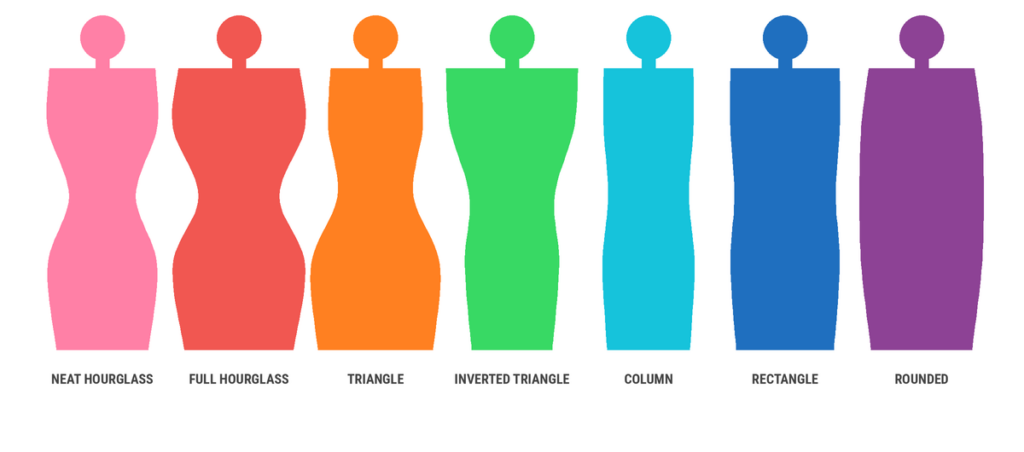
Bodies tend to come in seven geometries, and many of us are two at once. Think of yourself as a piece of art: what’s the shape of the frame?
- Neat hourglass: balanced shoulders and hips with a defined waist, on a smaller scale.
- Full hourglass: the same balance with more curve at the bust and hips.
- Triangle: hips wider than shoulders.
- Inverted triangle: shoulders wider than hips.
- Column: long and narrow, with little difference between shoulders, waist and hips.
- Rectangle: shoulders, waist and hips about the same width.
- Rounded: fullest through the middle, often with slimmer legs and arms.
The styling trick is the same for everyone: add volume where you’re smaller and keep it simple where you’re bigger, so the eye reads the relationship between the two as balanced. You’re not hiding anything. You’re composing.
Your frame and your lines
- Frame size: wrap your thumb and middle finger around your opposite wrist. Overlap is a small frame, touching is medium, a gap is large. Scale your prints and accessories to match.
- Angular: mostly edges and straight lines in your face and body.
- Rounded: mostly curves.
- Interjacent: a mix of both, angular in some places and rounded in others.
And the simplest styling advice there is: show your wrists and ankles. They’re the most elegant part of every body. A pushed-up sleeve or a cropped hem does more than almost any accessory.
Match your pattern to the pattern of you
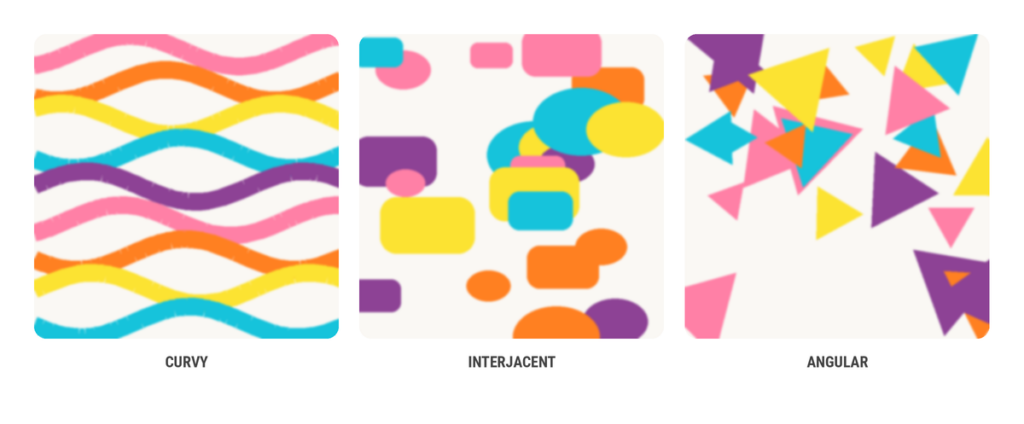
- Curvy: fluid, rounded patterns: swirls and watery forms.
- Interjacent: lean either way, but skip the extremes.
- Angular: geometric and angular abstract designs.
At a Personal Dye Session we dash your pieces in a pattern that echoes your lines, so the print looks like it belongs to you.
Start with denim and t-shirts
They’re the pieces you wear most, so they pay you back fastest. Shift your jeans toward your best blue, then dye a few tees in your capsule rainbow, and suddenly everything goes together. Your skin tone guide has your exact dyes; Choosing Fabrics tells you what will take dye.
-
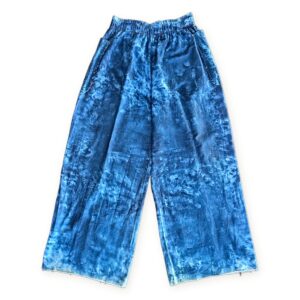
Dance Denim
$120.00 Select options This product has multiple variants. The options may be chosen on the product page -
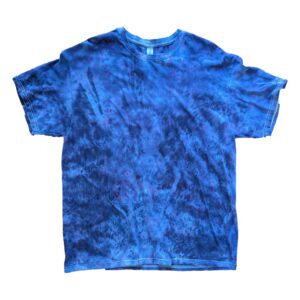
Cotton T-Shirt
$20.00 Select options This product has multiple variants. The options may be chosen on the product page -
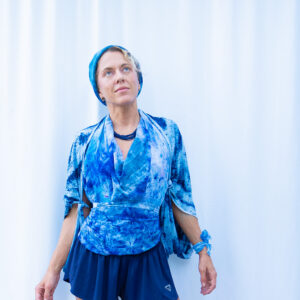
Wild Rag
$40.00 Select options This product has multiple variants. The options may be chosen on the product page -
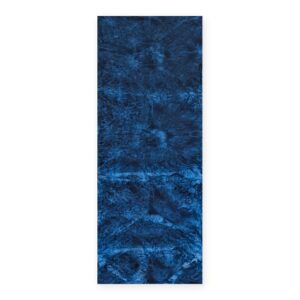
Festival Scarf
$120.00 Select options This product has multiple variants. The options may be chosen on the product page
Color is a superpower
The right color makes you look rested and your eyes look brighter. It makes you stand out, and if you’re looking great, standing out isn’t a bad thing. Expanding your color vocabulary helps you understand yourself, and wearing your colors is an expression and a celebration of who you are.
Being visually pleasing doesn’t take away from your intellectual heft. What you wear imprints on your own consciousness and on everyone else’s, so let it serve you well.
I love architectural clothes with no embellishment, so I can embellish them my own way. Dash dyeing has let me shift my wardrobe closer to me, one piece at a time.
Keep reading
- Your season: Color by Season, the twelve seasons in my dyes
- Why you love what you love: Color Psychology and Color Frequencies
- How color feels in your body: Color as Somatic Language and What Color Is a Feeling?
Your next step
Book A Color Revival
Three hours to revive your whole closet in the colors that are truly yours: an in-depth color analysis, a closet edit, six pieces dash-dyed as a capsule that mixes and matches, and ten styled photos of you in it.
More joy is possible.